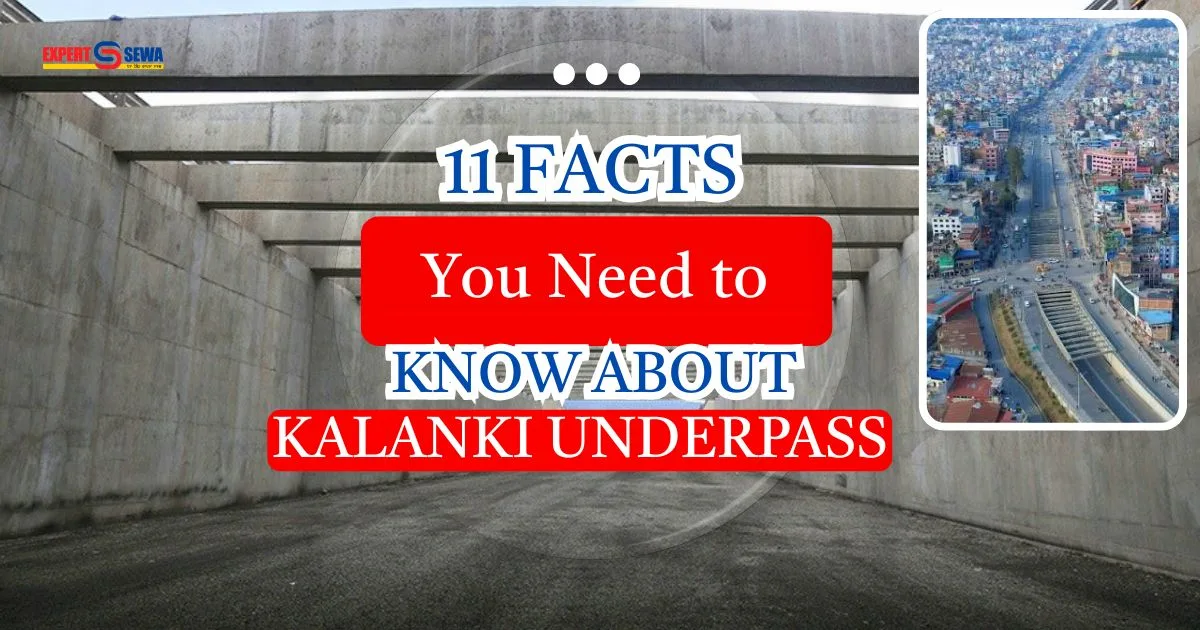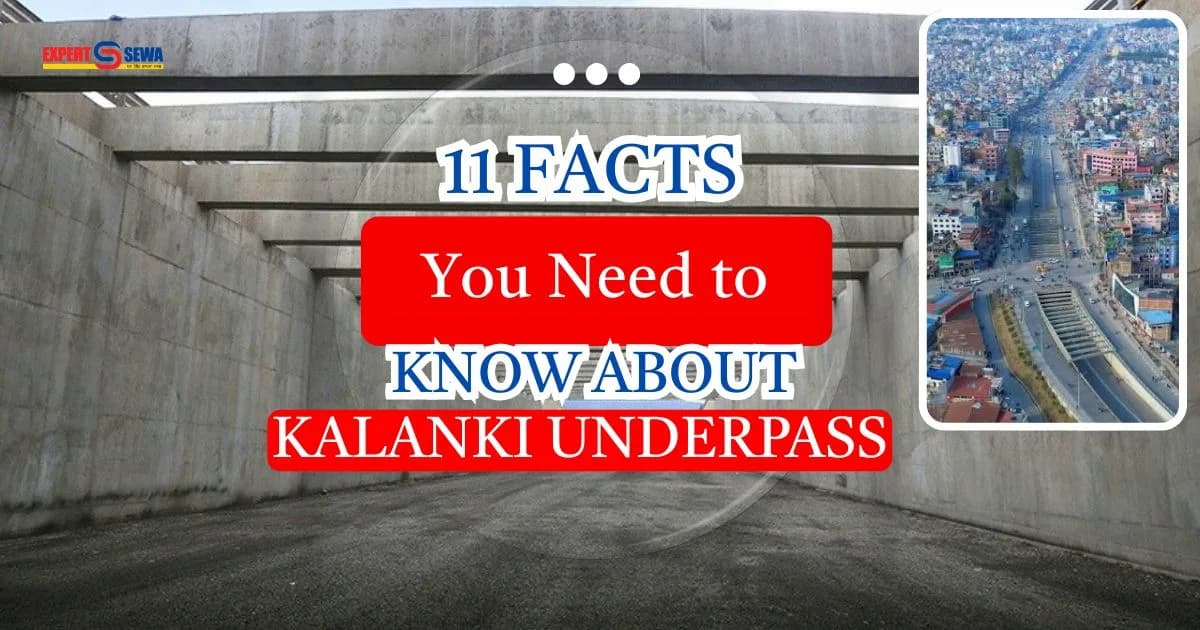
11 Facts You Need to Know About the Kalanki Underpass
Let me paint you a picture of Kalanki before 2018.
It is 8:15 in the morning. You are sitting in a microbus somewhere between Kalimati and Kalanki Chowk. The driver has turned the engine off — not because there is a problem, but because there is absolutely no point in keeping it running. The bus is not moving. Nobody is moving. The smell of diesel exhaust sits thick in the air, mixing with dust and the faint smell of garbage from the roadside. Somewhere ahead, three lanes of traffic are trying to merge into one, and a traffic officer is waving his hands at a crowd of vehicles that have already stopped listening. Two hours. That is what a bad morning at Kalanki could cost you — two full hours of your day, every single day.
That was the reality of Kalanki Chowk for decades. And then the Kalanki underpass changed everything.
I have been working in civil infrastructure in Kathmandu long enough to remember when the idea of an underpass at Kalanki felt like something out of a development plan that would never actually get built. Nepal had never constructed one before. Not a single underpass, anywhere in the country. So when the Kalanki underpass finally opened its four lanes to trial traffic on August 17, 2018, it was not just a road opening — it was a proof of concept for what this city could build.
Here are 11 facts you need to know about it.
11 Facts About the Kalanki Underpass
Fact 1: It Is Nepal's First-Ever Underpass
The Kalanki underpass holds a distinction no other road structure in Nepal can claim — it is the country's first underpass. Ever. Before this, Nepal had overhead bridges, flyovers, and at-grade crossings, but nothing that took traffic below the surface of a major urban junction. That alone makes the Kalanki underpass historically significant, regardless of what you think about how long it took to build.
Fact 2: It Stretches 800 Meters, from Khasibazar to Bafal Chowk
The Kalanki underpass runs exactly 800 meters, connecting Khasibazar on one end to Bafal Chowk on the other. To give you a reference point: if you are driving toward the Kalanki underpass from Khasibazar, you enter the tunnel at the Makalu Petrol Pump area and emerge near the Bafal intersection. That 800-meter stretch sits directly beneath the surface-level traffic at Kalanki Chowk — one of the busiest road intersections in the entire Kathmandu Valley.
Fact 3: It Has Four Underground Lanes — Plus Surface Service Lanes
The Kalanki underpass carries four lanes of underground traffic. But the design does not stop there. Above the underpass, on the surface deck, there are additional service lanes running on either side to handle local residential and commercial access traffic. In total, the corridor provides six functional lanes of traffic movement — four below ground and two service lanes above. This design ensured that vehicles passing through the Ring Road got an uninterrupted underground passage, while vehicles accessing local areas like Bafal and Khasibazar still had a functional route above.
Fact 4: It Was Funded by a Rs. 5.13 Billion Chinese Grant
The Kalanki underpass did not come cheap, and Nepal did not pay for it alone. The project was funded through a grant of Rs. 5.13 billion (approximately 212 million Chinese Yuan) provided by the Government of the People's Republic of China. This was not a loan — it was a grant, meaning Nepal had no repayment obligation. The Kalanki underpass was built as part of the broader Koteshwor-Balkhupul-Kalanki Ring Road Improvement Project, which covered a total stretch of 10.5 kilometers along Kathmandu's Ring Road from Kalanki to Koteshwor.
Side note: Rs. 5.13 billion for a single road improvement corridor is a number that is easy to say quickly and hard to fully process. That is roughly equivalent to the construction cost of several major hospital buildings in Nepal. The scale of investment in the Kalanki underpass was genuinely unprecedented for road infrastructure in Kathmandu at the time
Fact 5: Shanghai Construction Group Built It
The contractor responsible for building the Kalanki underpass was Shanghai Construction Group, one of China's largest state-owned construction companies. They handled the engineering, construction management, and execution of the underpass structure along with the Road widening works on the 10.5-kilometer Ring Road stretch. The involvement of Shanghai Construction Group brought Chinese construction methodology and equipment to Kathmandu — and the pace of work, particularly in the later phases of the project, reflected that.
Fact 6: Construction Started in 2013 — Five Years Before It Opened
Construction on the Kalanki underpass project officially began in 2013. The original completion target was 2017. The underpass finally opened for trial use on August 17, 2018 — a full year behind schedule. That five-year construction timeline is not simply a story of slow execution. It is a story of two catastrophic interruptions that hit Nepal simultaneously.
Fact 7: The 2015 Earthquake and Indian Trade Embargo Both Derailed Construction
This fact carries real weight for anyone who was in Kathmandu during 2015 and 2016.
The April 25, 2015 earthquake struck Nepal when construction on the Kalanki underpass was already well underway. The immediate aftermath required every resource — human, material, and financial — to be redirected toward emergency response and reconstruction. Construction on the Kalanki underpass slowed significantly.
Then came the Indian trade embargo of late 2015 and early 2016. Fuel, cement, steel, and construction materials that normally arrived through the southern border stopped moving. For a project as material-intensive as an underpass, this was crippling. Concrete work, reinforcement placement, and finishing all depend on a continuous supply of materials. When those supplies dried up, work on the Kalanki underpass stopped.
These were not contractor inefficiencies. These were two genuine national crises colliding with a single infrastructure project. The Kalanki underpass bears the fingerprints of that period in its construction timeline.
Fact 8: 70,000 People and 8,000 Vehicles Passed Through Kalanki Every Single Day
To understand why the Kalanki underpass mattered so much, you need to understand what Kalanki Chowk actually handles in terms of volume.
According to data from the Metropolitan Traffic Police Division, approximately 70,000 people traveling in more than 8,000 public and private vehicles passed through Kalanki Chowk daily. This is the point where the Koteshwor-Swayambhu road and the Kalimati-Thankot road meet — two of Kathmandu's busiest arterial corridors. Every vehicle entering or leaving the western part of the valley effectively had to negotiate Kalanki. Before the Kalanki underpass was operational, that meant average wait times of over two hours during peak congestion.
Fact 9: It Is Part of a Larger 10.5-Kilometer Ring Road Upgrade
The Kalanki underpass is the headline feature, but it is one component of a much larger transformation. The same project widened the 10.5-kilometer Ring Road section from Kalanki to Koteshwor from a congested, narrow corridor into an eight-lane road. The full project scope included three overhead bridges, four river bridges, footpaths, and cycle tracks alongside the expanded road. The Kalanki underpass was the structural centerpiece of this upgrade — the engineering solution for the valley's single most congested intersection.
Fact 10: 36 Traffic Personnel Were Deployed on Opening Day
When the Kalanki underpass opened for trial traffic on August 17, 2018, the Metropolitan Traffic Police Office at Kalanki deployed 36 traffic personnel to manage the flow. That number tells you something. This was not a quiet opening. The moment the Kalanki underpass became accessible, traffic patterns that had been locked in gridlock for years began to shift. Vehicles that had spent years fighting through the surface intersection could now pass through continuously underground. The result, observed on that first day, was remarkably smooth traffic movement — something the Kalanki junction had not seen in living memory.
Fact 11: The Formal Inauguration Was Planned for December 2018
The trial opening on August 17, 2018, was not the formal inauguration. Project Manager Prakash Bhandari confirmed that the official opening was originally scheduled for December 2018, once dividers, traffic signals, signage, and the final layer of asphalt were in place. The Kalanki underpass was opened early — in its trial form — because the public need was immediate. The structure was safe and functional. Holding it closed for finishing works while 70,000 people continued to suffer through daily gridlock was simply not justifiable.
Personal Reflection: What the Kalanki Underpass Actually Feels Like
Imagine you are a resident of Bafal. You have been waking up at 6:30 AM for years — not because your workday starts that early, but because you needed a 90-minute buffer just to reach Thamel or Putalisadak by 9:00 AM. You learned the hard way that leaving at 7:30 meant arriving at 9:45, flustered and late.
After the Kalanki underpass opened, you tried leaving at 7:30 once. Just to test it. You arrived at your destination at 8:15. Forty-five minutes. You sat at your desk for a few minutes before anyone else arrived, genuinely unsure what to do with yourself.
That is what the Kalanki underpass delivered. Not just reduced travel time on paper — but actual minutes returned to actual people. The kind of time that, over months and years, means arriving somewhere calm rather than arriving breathless. It means a contractor from Balkhu can get materials to a site in Koteshwor without losing half a morning at one intersection. It means a school bus from Thankot is not turning a 20-minute route into a 75-minute ordeal.
The Kalanki underpass is not a glamorous structure. It does not have the visual drama of a cable-stayed bridge or a mountain tunnel. From above, you do not even see it — just the smooth flow of traffic where chaos used to live. But that invisibility is, in a way, the highest compliment you can give to urban infrastructure. It works so well that people have already started to forget what Kalanki used to be like.
That, from an engineering standpoint, is exactly what success looks like.
The Kalnki underpass opened for public trial on August 17, 2018, as part of the Koteshwor-Balkhupul-Kalanki Ring Road Improvement Project, funded by a Rs. 5.13 billion grant from the Chinese government and constructed by Shanghai Construction Group.