
Cavity Wall Nepal: Advantages & Disadvantages Complete Guide
If you're planning to build or renovate your home in Nepal, you've probably heard the term "cavity wall" floating around. And honestly? It's not just another construction buzzword. A cavity wall in Nepal is genuinely changing the way smart homeowners and engineers think about building design—from Kathmandu's dense urban neighborhoods to the rain-soaked hills of Pokhara and the scorching Terai plains.
At Expert Sewa, we've worked with hundreds of homeowners, architects, and civil engineers across Nepal. And one question keeps coming up again and again: "Is a cavity wall really worth it in Nepal?"
Today, we're going to answer that completely, honestly, and with real-world context that makes sense for Nepal's unique climate, seismic conditions, and construction culture.
What Exactly Is a Cavity Wall?
Before we dive into the advantages and disadvantages of cavity walls, let's make sure we're all on the same page.
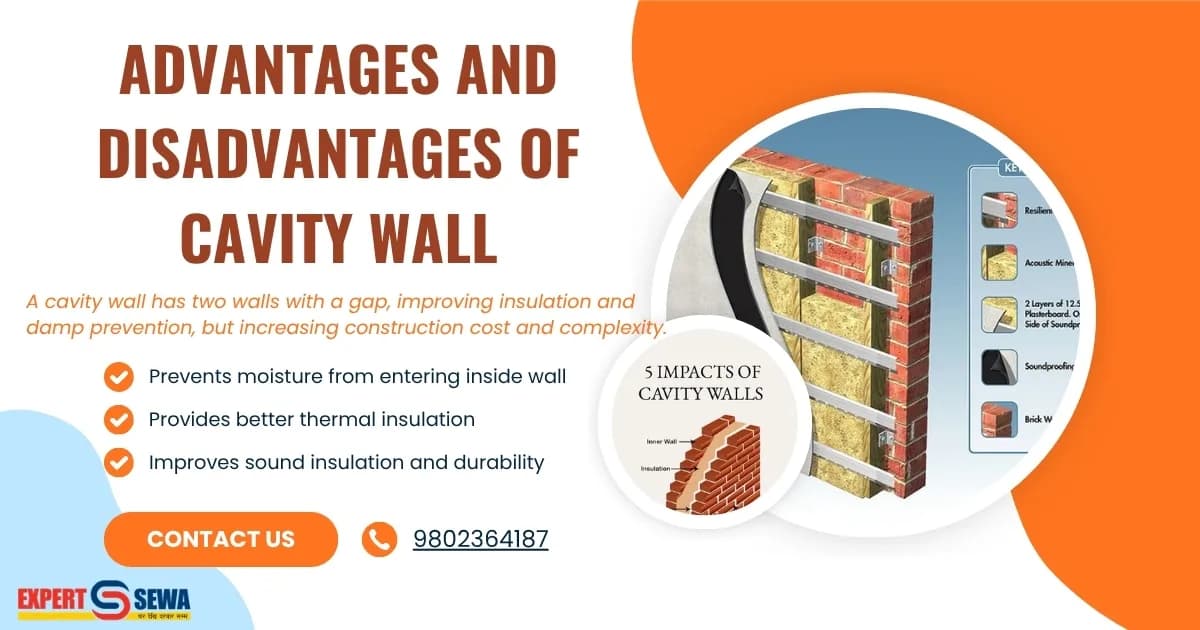
A cavity wall is a wall construction method that uses two separate parallel walls—called "skins"—with a deliberate gap or "cavity" between them. The outer skin is typically made from brick, stone, or concrete blocks. The inner skin is usually lightweight concrete blocks or bricks. That gap in between? It's either left as an airspace or—more commonly in modern construction—filled with insulation material like mineral wool, foam board, or AAC (autoclaved aerated concrete).
The cavity typically measures between 50 mm and 100 mm, and the two walls are connected using metal wall ties or bonding connectors to ensure structural integrity.
This is not a new technology globally, but in Nepal, cavity wall construction is now emerging as a smarter, future-proof alternative to traditional solid wall methods. And the reasons are compelling.
Why Is a Cavity Wall Especially Relevant in Nepal?
Nepal is a country of dramatic contrasts—geographically, climatically, and structurally. You have freezing winters in the Himalayan belt, monsoon-heavy summers in the hills, and blazing heat in the Terai. Add to that the reality that Nepal sits in one of the world's most active seismic zones, and you quickly realize that standard construction methods often fall short.
That's exactly why cavity walls in Nepal are gaining serious attention among forward-thinking builders and homeowners. It's not just about aesthetics or trends—it's about building homes that are safer, smarter, and more resilient for the Nepali environment.
Let's get into the real details.
Advantages of Cavity Wall in Nepal
1. Superior Thermal Insulation for Nepal's Diverse Climate
One of the biggest and most talked-about advantages of Arty Wall is its incredible thermal performance. The air gap — or insulation-filled cavity — between the two wall skins acts as a natural thermal barrier, dramatically reducing heat transfer between the outside environment and your interior living space.
In Nepal, where temperatures can swing from sub-zero in Himalayan winters to 40°C+ in the Terai summer heat, this matters enormously. A properly built cavity wall in Nepal can:
Keep your home warmer in winter without relying on constant heaters
Keep interiors cooler in summer without blasting air conditioning
Reduce energy consumption by 20–25% annually, according to construction data from similar climatic conditions
For Kathmandu Valley residents dealing with increasingly cold winters and hot summers, a cavity wall in Nepal is not a luxury — it's fast becoming a necessity.
2. Outstanding Moisture Resistance During Nepal's Monsoon Season
Ask any civil engineer in Nepal what their biggest construction headache is, and most will say: moisture. Nepal's monsoon season brings intense, sustained rainfall for months. Traditional solid walls, especially in older homes, simply absorb this moisture — leading to damp interiors, wall decay, mold growth, and long-term structural damage.
A cavity wall in Nepal addresses this problem head-on.
The gap between the two walls physically prevents water from bridging across to the interior skin. Combined with strategically placed weep holes at the base of the outer wall, rainwater is actively directed outward rather than being absorbed inward. This makes cavity walls in Nepal an ideal solution—it's the following:
Homes in heavy monsoon zones like Pokhara, Chitwan, and the Eastern Hills
Basement and ground-floor construction in low-lying Terai areas
Urban buildings in Kathmandu where moisture seepage is a chronic complaint
This moisture-resistance advantage alone makes the cavity wall a game-changer for Nepali home construction.
3. Impressive Sound Insulation — Perfect for Urban Nepal
Urban noise in Nepal's cities has exploded in recent years. Whether it's the constant traffic on Ring Road, construction sounds in Lalitpur, or the busy bazaar streets of Pokhara — noise pollution is a real quality-of-life issue.
A cavity wall in Nepal provides a natural acoustic buffer. The combination of the cavity gap and the insulation material inside it works to absorb and dampen sound waves before they reach the inner living space.
This benefit of cavity wall makes it an ideal choice for:
Residential apartments near highways or busy markets
Hotels and guesthouses wanting to offer guests a peaceful stay
Offices and commercial buildings requiring concentration-friendly environments
Schools and hospitals where noise control directly impacts performance and wellbeing
If you live or work near one of Nepal's increasingly noisy urban centers, the sound insulation advantage of a cavity wall is not something to overlook.
4. Earthquake Resistance — Critical for Nepal's Seismic Reality
The 2015 Gorkha Earthquake was a devastating reminder that Nepal's buildings must be designed with seismic safety at their core. Nepal's National Building Code (NBC) already requires earthquake-resistant construction standards, and cavity wall construction aligns powerfully with these requirements.
Here's why a cavity wall in Nepal is seismically smarter:
Lighter construction: Cavity walls are significantly lighter than traditional solid walls, reducing the total seismic load on a building's foundation and structure
Flexible energy absorption: The dual-skin design allows slight flex during tremors, reducing the risk of sudden, catastrophic cracking
Compliant with NBC standards: Cavity wall systems using lightweight materials like AAC blocks meet Nepal's National Building Code guidelines for earthquake-resistant construction
For any homeowner in Nepal — whether you're in Kathmandu, Dhading, or Sindhupalchok — cavity wall construction adds a meaningful layer of seismic safety to your building.
5. Long-Term Energy Efficiency and Cost Savings
Let's talk numbers. Nepal faces ongoing energy challenges. Hydropower is the dominant energy source, but electricity demand continues to outpace supply in many areas. Reducing your home's dependence on heating and cooling appliances is not just good for your wallet — it's good for the national grid.
A cavity wall in Nepal helps you achieve exactly that:
Reduces heating and cooling costs by an estimated 20–25% annually
Offers a strong return on investment (ROI) within 5–10 years through accumulated energy savings
Increases property value, as energy-efficient homes command higher prices in Nepal's growing real estate market
Contributes to Nepal's smart city and climate-resilient infrastructure goals
Yes, the initial cost of a cavity wall in Nepal is higher than solid wall construction. But homeowners who think long-term consistently find that the energy savings, reduced maintenance, and increased property value make it a financially intelligent decision.
6. Eco-Friendly and Sustainable Construction
Nepal is increasingly focusing on green building practices and sustainable urban development. A cavity wall in Nepal naturally supports these goals.
By using insulation materials that reduce energy consumption, and by incorporating lightweight, eco-friendly materials like AAC blocks — which have a lower carbon footprint than traditional solid brick — cavity wall construction is a direct contribution to sustainable development.
For homeowners and developers who care about their environmental impact, choosing a cavity wall in Nepal is a meaningful, practical step toward greener construction.
7. Enhanced Structural Stability and Durability
The dual-skin design of a cavity wall isn't just about insulation — it also adds genuine structural strength. The two parallel walls support each other through the connecting wall ties, creating a construction that is more resilient to:
External wind pressure (important in Nepal's hill regions and high-altitude areas)
Seismic lateral forces
Long-term material fatigue and weather-related wear
A well-built cavity wall in Nepal simply lasts longer than its solid wall equivalent — which translates directly into lower long-term maintenance costs.
Disadvantages of Cavity Wall in Nepal
Being transparent is core to Expert Sewa's approach. So let's talk honestly about the disadvantages of cavity wall — because no construction method is without its challenges.
1. Higher Initial Construction Cost
This is the most commonly cited disadvantage of cavity wall in Nepal. Compared to a traditional solid masonry wall, a cavity wall requires:
More construction materials (two wall skins + insulation + wall ties)
Skilled, experienced labor who understand the precise requirements of cavity wall construction
Longer construction timelines in some cases
The cavity wall construction cost in Nepal can be 15–30% higher upfront than solid wall alternatives. For homeowners on tight budgets, this initial investment can feel like a barrier.
However — and this is important — most construction experts, including the team at Expert Sewa, will tell you that this initial cost difference is typically recovered within 5–10 years through reduced energy bills and lower maintenance costs.
2. Installation Complexity Requires Expert Skill
A cavity wall in Nepal is not a "do-it-yourself" project. The construction requires precision at every step — from ensuring the correct cavity width to placing insulation without gaps or compression, to installing wall ties at the right spacing and angle.
Common mistakes made by unskilled contractors include:
Thermal bridging — where heat bypasses the cavity through poorly placed wall ties or bridging materials, negating the thermal benefits
Cavity contamination — where mortar droppings block the cavity during construction, creating moisture bridges
Improper weep hole placement — leading to water accumulation inside the wall rather than drainage
This is why choosing a qualified, experienced construction partner like Expert Sewa is absolutely critical when building a cavity wall in Nepal. The benefits of a cavity wall are only fully realized when construction is done correctly.
3. Ongoing Maintenance and Insulation Degradation
Over time, some types of cavity wall insulation materials can degrade, settle, or become less effective — particularly if moisture has entered the cavity due to improper construction or damage.
Signs that your cavity wall in Nepal may need maintenance include:
Unexplained increases in heating or cooling bills
Visible damp patches on internal walls
Cold spots or condensation on interior surfaces
Regular professional inspections — something Expert Sewa recommends every 5–7 years — can catch these issues early and prevent costly structural damage down the line.
4. Longer Construction Timeline
Due to the more complex construction process, building a cavity wall in Nepal typically takes longer than constructing a traditional solid wall. For homeowners working with tight project deadlines, this can be a scheduling challenge.
Proper planning and engaging experienced professionals from the beginning can significantly minimize this delay.
How to Install a Cavity Wall in Nepal — Step-by-Step Process
If you've weighed the advantages and disadvantages of cavity wall and decided it's the right choice for your Nepali home, here's a clear breakdown of the installation process:
Site Preparation — Ensure a stable, level foundation with proper drainage provisions. The base course must be correctly damp-proofed.
Outer Wall Construction — Build the external skin using quality brick, stone, or concrete blocks. Ensure the wall is perfectly plumb and level throughout.
Wall Tie Installation — Place stainless steel or galvanized wall ties at specified intervals (typically every 450mm vertically and 900mm horizontally) to connect the two skins securely.
Insulation Placement — Install the chosen insulation material (mineral wool, rigid foam board, or AAC panels) evenly within the cavity. Ensure full, gap-free coverage to maximize thermal performance.
Inner Wall Construction — Build the inner skin simultaneously with the outer, ensuring correct cavity width is maintained throughout.
Weep Hole Installation — Place weep holes at the base of the outer wall to allow any moisture that enters the cavity to drain freely outward.
Finishing and Sealing — Apply plaster or appropriate finish to both surfaces. Seal all joints, window reveals, and edges carefully to prevent moisture ingress.
Cavity Wall vs. Solid Wall — Quick Comparison for Nepal
Feature | Cavity Wall | Solid Wall |
Thermal Insulation | Excellent | Poor to Moderate |
Moisture Resistance | Superior | Moderate |
Sound Insulation | Very Good | Moderate |
Earthquake Resistance | Better (Lighter) | Heavy Load |
Initial Cost | Higher | Lower |
Long-Term Savings | Significant | Minimal |
Eco-Friendliness | Higher | Moderate |
Installation Complexity | Requires Expertise | Simpler |
Lifespan | Longer | Shorter |
Frequently Asked Questions About Cavity Wall in Nepal
Q: Is cavity wall construction suitable for earthquake-prone areas of Nepal?
Absolutely. A cavity wall in Nepal is actually better suited for earthquake zones because its lighter construction reduces the seismic load on the structure. Combined with proper reinforcement, it meets NBC seismic safety standards.
Q: How much does a cavity wall cost in Nepal?
The cost varies depending on wall dimensions, insulation choice, and location. Generally, cavity wall construction costs in Nepal are 15–30% higher than solid walls initially — but the long-term energy savings make it cost-effective within 5–10 years.
Q: Can cavity walls handle Nepal's monsoon season?
Yes — this is one of the strongest advantages of cavity wall in Nepal. The cavity gap prevents water from bridging to the inner wall, and weep holes actively drain any moisture that enters.
Q: Which insulation material is best for cavity walls in Nepal?
For Nepal's climate, mineral wool and rigid foam boards are popular choices. AAC (Autoclaved Aerated Concrete) blocks are also increasingly used as a lightweight, insulating inner skin material.
Q: Do I need a specialist contractor for cavity wall construction in Nepal?
Yes, unequivocally. The advantages of cavity wall are only fully delivered when construction is done correctly. Always engage experienced professionals. Expert Sewa specializes in exactly this kind of precision construction work across Nepal.
Final Verdict — Is a Cavity Wall in Nepal Worth It?
After everything we've covered, the answer is clear: for most homeowners in Nepal, a cavity wall is absolutely worth the investment.
The advantages of cavity wall in Nepal — superior thermal insulation, monsoon moisture resistance, sound dampening, earthquake resilience, long-term energy savings, and eco-friendly construction — overwhelmingly outweigh the disadvantages of cavity wall like higher upfront cost and the need for skilled installation.
Nepal's construction landscape is evolving. Homeowners and builders who embrace smarter, more science-backed building methods today will enjoy safer, more comfortable, and more valuable homes for decades to come.
At Expert Sewa, we've helped hundreds of Nepali families build homes that are not just structurally sound, but genuinely future-proof. If you're considering a cavity wall in Nepal for your next construction or renovation project, we're here to guide you every step of the way — from design and material selection to expert installation and post-construction inspections.
Ready to Build Smarter with Expert Sewa? Contact us today for a free consultation on cavity wall construction in Nepal. Let's build your home the right way — the first time.
Expert Sewa — Engineering Excellence in Nepal. Your trusted partner for smart, safe, and sustainable construction.